
CX Is Like a Dancefloor
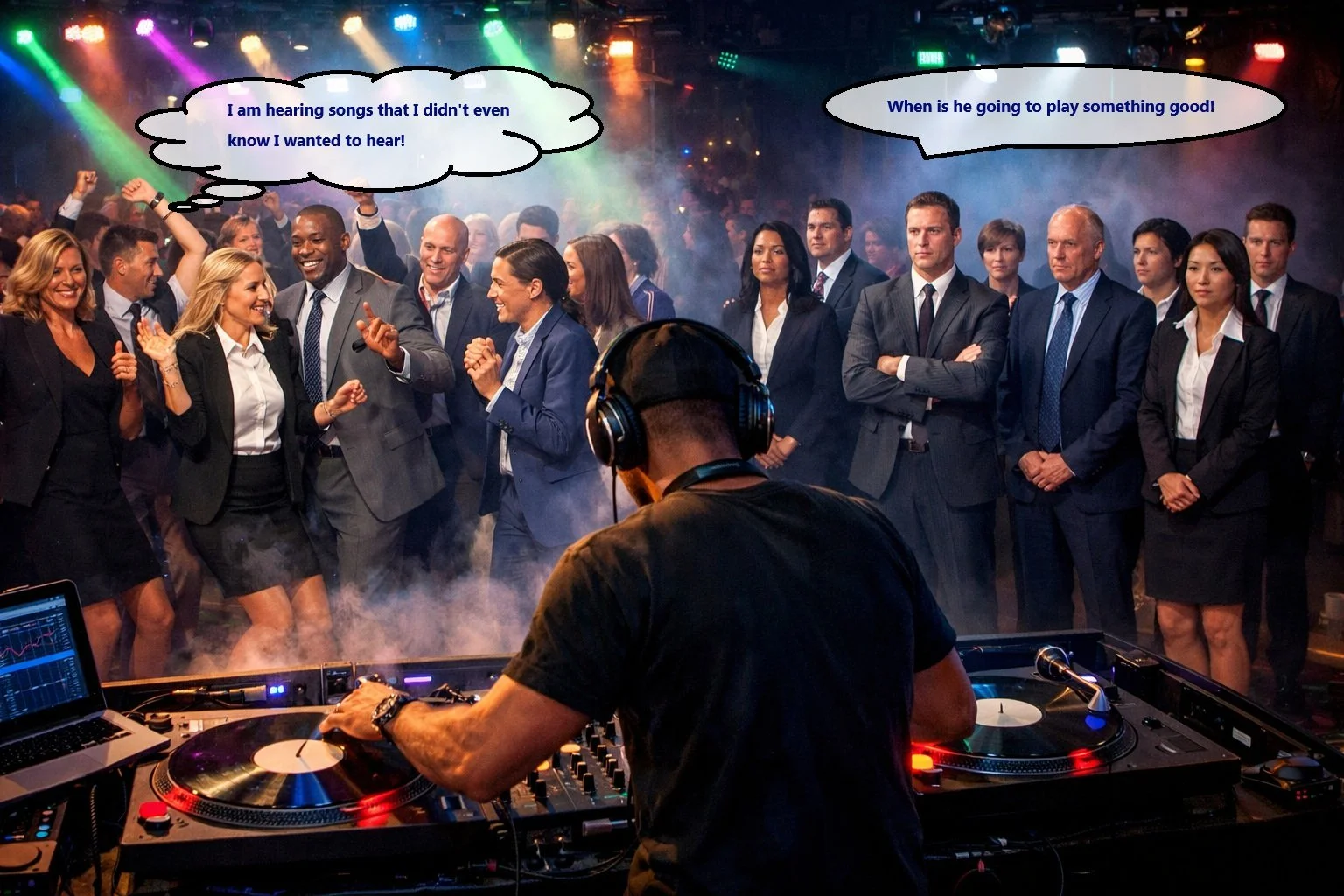
In the business world, we often talk about "tuning in" to the customer. But if we view a company as a DJ and the market as a dance floor, the metaphor hits a much deeper groove. As someone who moonlights as a DJ, I have noticed that satisfying your customers is a lot like a DJ set. Here is what I have learned about increasing customer satisfaction by pumping out the bass in clubs.
The Introduction: The Setlist Solution
1) A great set is started by a killer opening track. You have to hook your customers in with an appealing initial offer or sale price.
2) A great DJ will continually monitor the club to make sure they are responding to crowd energy and play songs accordingly. Companies call this market research!
3) You spend a whole lot of time trying to avoid the song that clears the dance floor... AKA product downtime or a PR crisis. And then when that does happen, you pull out the Daft Punk (or whoever) to resuscitate the BPM and get people back out on the dance floor.
4) And finally at the end of a packed dance floor, you get drunken high fives after the set. This is also known as brand advocacy and likelihood to recommend. Here is a breakdown:
The Setlist vs. The Solution
| Feature | The DJ Set | The Customer Experience |
|---|---|---|
| The Hook | A killer opening track. | A seamless onboarding/first purchase. |
| The Vibe | Real-time energy reading. | Data-driven personalization. |
| The Fail | Technical silence or a "clear out" track. | Product downtime or a PR crisis. |
| The Win | A packed floor and an encore. | High LTV and brand advocacy. |
The Similarities: The Shared Pulse
Anticipatory Service: A great DJ doesn't play the song the crowd wants now; they play the song the crowd didn't know they wanted next. Companies find the highest satisfaction when they solve "unmet needs" before the customer has to complain.
The Feedback Loop: If the dance floor empties, the DJ changes the BPM. If churn spikes, the company pivots the product. Both rely on a constant, visceral feedback loop where silence is the deadliest sound.
Emotional Resonance: People don’t just buy a drill; they buy a hole. People don’t just listen to a beat; they buy a feeling. Satisfaction in both realms is rooted in how the "performer" makes the "audience" feel about themselves.
The Differences: The Morning After
Duration of the High: DJ satisfaction is a sprint—a peaked, transient chemical hit that lasts until the lights come up. Customer satisfaction is a marathon; it’s a slow-burn trust built over months of consistent invoices and support tickets.
The "One-to-Many" vs. "One-to-One": A DJ satisfies a collective "vibe." If 80% of the room is dancing, the set is a success. In business, that remaining 20% can tank your NPS score and roast you on social media. Companies have to play a different song for every ear simultaneously.
The Cost of a "Miss": If a DJ plays a bad transition, the crowd groans but stays for the next track. If a company misses a delivery or leaks data, the "audience" doesn't just stop dancing—they demand a refund and leave the club forever.
The "Remix" Strategy
To keep the floor packed, a company must move beyond transactional satisfaction (playing the hits) and move toward experiential loyalty (owning the night).
Most DJs live by the rule that a “great DJ doesn’t play the song you want to hear next; they play the song you didn’t know you wanted to hear.” Customers are most satisfied when you address unmet/unknown needs before they can complain. You don’t want to be just a jukebox that plays what requested; be the DJ (or company) who reads the room and defines the genre... regardless if that involves Daft Punk or not.